

Malaga Cruise Port joins the Hidden Disabilities Sunflower programme to enhance support for passengers with non-visible disabilities
Malaga Cruise Port has introduced the international Hidden Disabilities Sunflower programme across its three cruise terminals, strengthening its commitment to accessibility, inclusion and an improved passenger experience.
The Hidden Disabilities Sunflower programme enables people with non-visible disabilities, health conditions or chronic illnesses to voluntarily and discreetly indicate that they may need additional time, understanding or support while travelling through the terminals.
The Sunflower is an internationally recognised symbol that helps staff identify these needs and provide a more aware and flexible approach, whether through clearer guidance, additional time for certain processes or extra assistance when required.
The initiative has been implemented across Terminals A and B and the Palmeral Terminal. As part of the programme, teams in direct contact with passengers — including security staff, passenger services teams, terminal operators and retail staff — have received dedicated information and training to recognise the Sunflower symbol and respond appropriately when a passenger may require additional support.
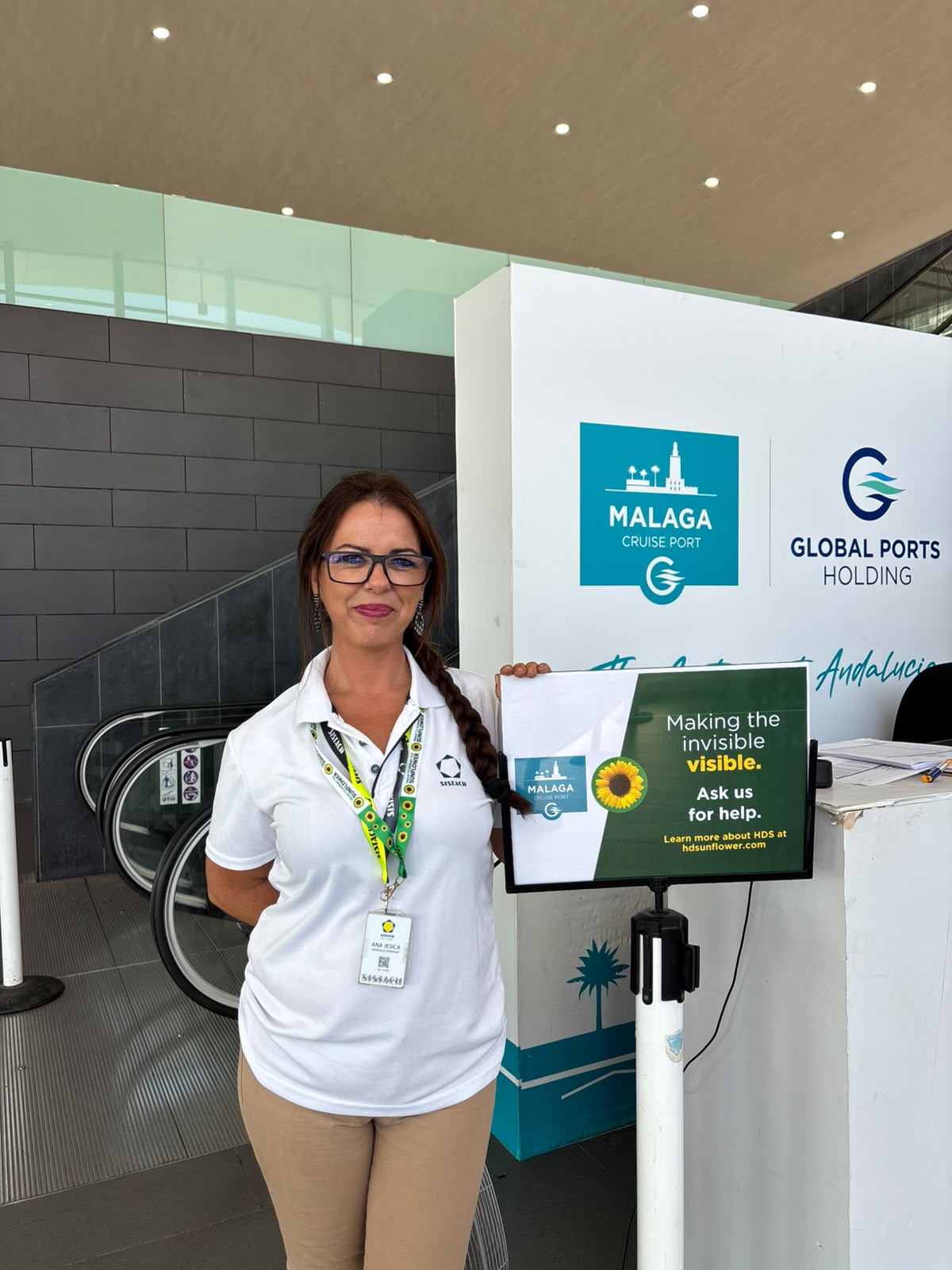
Security staff and Malaga Cruise Port operators also wear Sunflower programme identifiers, while dedicated signage has been installed across the three terminals to make the programme easily recognisable to passengers.
Malaga Cruise Port’s participation is part of the rollout of the Hidden Disabilities Sunflower programme across the international network of Global Ports Holding (GPH), reinforcing the group’s commitment to making cruise terminals increasingly inclusive, accessible and better prepared to respond to the diverse needs of travellers.
Launched in the United Kingdom in 2016, Hidden Disabilities Sunflower is now recognised in more than 95 countries and is present across airports, airlines, transport networks, retail environments, tourism destinations and public organisations.